Margerumalia – Molly the Maid

Newsletter – October 10, 2025

Tabitha Deferred

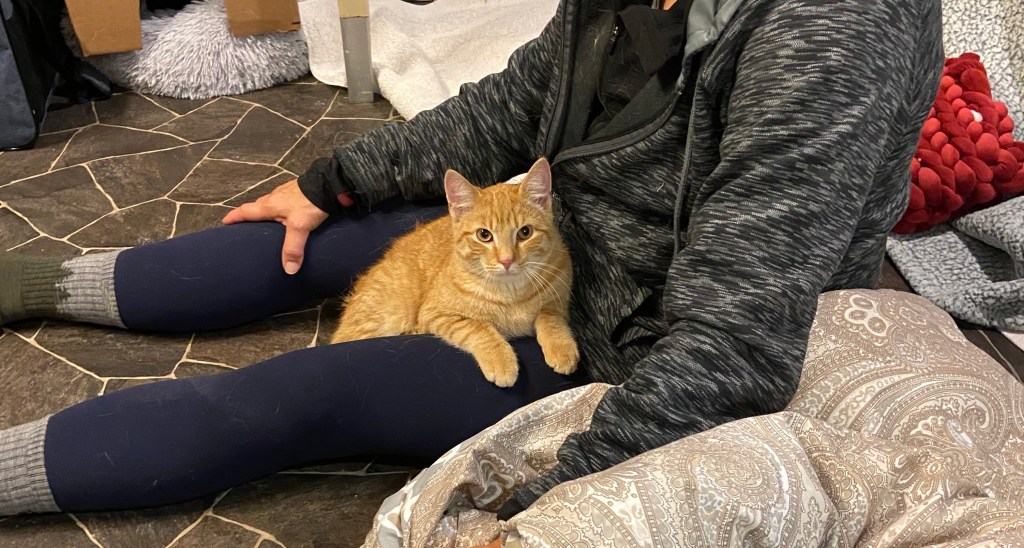
The saga of Tabitha has reached a stalemate for the time being. She will not re-enter the cage to eat food and spring the trap, but after several days of not eating she showed up at our back door looking thin and forlorn. So we fed her…with medication. She ate more than one-and-a-half cans.

She still needs to have her sutures removed, but her rear end didn’t look swollen last time we could see it. Maybe she bit through them while cleaning herself?

Hopefully she’ll trust us once more to provide food and care and have her stitches out at the vet, but it hasn’t happened yet.

Meanwhile, I have an excellent book to recommend:

The Maid, by Nita Prose

Like me, you’ve probably seen this book cover several times over the last few years. It was selected for the GMA Book Club, among other things. I saw the audiobook on sale and decided to give it a spin.

I like whodunnits and, having worked retail, served coffee and bartending, I figured I could relate to the service aspect of a hotel maid. 

But Molly is a maid with a difference. 

Molly is the first person narrator, so her perspective isn’t entirely explained. She seems to be on the autism spectrum, as she admits to having difficulty discerning other people’s emotions. She is also obsessive about cleaning rooms, her clothing, and her apartment.

Molly is also very observant, like her TV hero Columbo. She and her Gran used to watch that show together all the time, making her a perceptive detective.

When Molly enters to clean a room in The Grand Hotel she discovers the dead body of a very rich man. She becomes a prime witness, and later the prime suspect. 

Molly’s point of view is delivered with perfection by Lauren Ambrose in the audiobook, conveying her confusion, frustration, and emotions. I suspect that if you read the book yourself, you’ll also hear Molly’s voice in your mind. The narrative is written that well.

No spoilers here, but I will say that I was surprised by a few twists and turns near the end of the novel and even got a bit choked up by the sentiment in that part of the story. 

Speaking of the end, do not skip the epilogue. Writers these days are discouraged from presenting a prologue or an epilogue because, they say, it should just be part of the book. I don’t have an opinion on that, but if you skip the epilogue of The Maid you’ll miss the most interesting twist of all.

I see that Nita Prose has written additional books for this character, but this first book is completely self-contained, no cliff-hanger or unanswered questions. You could start and stop with this first book and feel very satisfied. 

Thanks, Nita, I appreciate that. I don’t like those stray hairs any more than Molly does.

TTFN

* * * * *

My middle grade novel, The Most Amazing Museum of Los Angeles is available through The BookBaby Bookshop at https://store.bookbaby.com/book/the-most-amazing-museum-of-los-angeles

Margerumalia – Tabitha, Part 3

Newsletter – October 3, 2025

PHOTO: Debbie Margerum

When I left off last week, Tabitha had stepped on the metal plate to trigger the door spring and we whisked her off to Purdue Veterinary Clinic. Then we made the decision to bring her back and release her so she could go nurse her kittens somewhere out there in the woods.

We had decided to trust her to trust us. 

Now you’re caught up.

After feeding her the canned food with the stool softener, we lifted the cage door and she pulled back like the photo above from when she was captured. 

“C’mon, Tabby, we brought you back to feed your little ones. Go.” 

I pressed my finger against her backside through the bars of the cage and she dashed out, crossed the deck, and disappeared into the brush. 

“Just please come back, so we can give you more medicine.” 

A moment after she left I realized that I had touched her for the first time since she was born over two years ago. In the past she had been willing to touch her nose to my finger, and I’d settled for “butterfly kisses” from her whiskers but I always wanted to pet her. She was soft and furry, of course, and a little bit scrawny, but mostly I felt her warmth and the moment of connection that came with it. Interesting what your finger can tell you in a brief touch.

It was a bucket list moment. Brief but meaningful. 

God bless that cat, she’s returned to eat every morning since. And I know the medicine is working because I saw her in the neighbor’s yard a few days later when she lifted her tail to spew brown liquid generously across the grass. Sorry, Cindy.

The current conundrum (or cat-nundrum) is our need to catch her again to have the sutures removed. On Monday morning she sat by the cage staring at the food for twenty minutes hoping to get her daily bowlful, then gave up and left.

No food. No medication. Did we make a mistake by letting her loose? Or did we save her kittens? 

The vet checked her for lactation and was uncertain whether she was actively nursing because of the low amount of milk they could express. We chose to let her feed them if at all possible—these kittens we’ve never seen.

I started writing about this series of events two weeks ago with “Fear of the Unknown,” and we’re still fearing the unknown. A reflection of our times, isn’t it?

Meanwhile I finished writing the adventure of the two girls in The Most Amazing Museum of Chicago and got them safely away from The Great Chicago Fire. More unknowns ahead for me and my characters!

* * * * *

If you received this email because it was forwarded to you by a subscriber, welcome. You can subscribe as well by following the link on my website: ericmargerum.com. A free story awaits you there.
Margerumalia – Tabitha, Part 2

Newsletter – September 26, 2025

In the picture above, Tabitha waits patiently outside the trap.

“I can wait here all day,” she seems to say. “How about you?”

“Just go in, Tabby, so the vet can help you.” 

It was a game of chess that could only continue if she made the next move. 

As I wrote last week in “Fear of the Unknown,” Tabby had what looked like a piece of raw meat hanging out from under her tail. If we ignored it and it got infected she’d probably die, as would the three-week old kittens she had nested somewhere in the woods.

On the phone, I asked the vet how often three-week old kittens needed to feed. The answer: “They need to nurse every few hours.”

We had replaced the food holder in the cage with something much smaller. Something that would require her to step on the metal plate and trigger the door to shut. 

“Nice fresh canned food, Tabitha,” we murmured from indoors.

After forty-five minutes of waiting, she entered the cage. She stepped on the plate and the door slammed shut. It was GO time! 

My wife and I had prepared for this moment. An old towel to cover the cage and another one under it. We didn’t know if Tabby would scared-pee or, as the expression goes, get pissed off. No problem with that, thankfully.

We got her to the Emergency Vet Care at Purdue University where she refused to cooperate. She’d never been touched by a human being! They had to put her under just to examine at her. 

I’ve heard of a prolapsed uterus after childbirth, but I’d never heard of a prolapsed colon. Apparently it’s not uncommon with outdoor cats who have worms. Inside the cat’s guts things can get so backed-up that a cat will strain enough to push out part of the colon. That was the “raw meat” we saw under Tabby’s tail. 

While Tabitha was asleep, they restored the colon and used sutures to hold it in place. Non-dissolving sutures that encircled the “tube” of the colon. She would need to eat food with stool softener to have successful poops. They told us to bring her back in two weeks to have the sutures removed.

I’ve found that being a pet owner, a home owner, a car owner, and a parent, comes with a lot of choices and responsibilities. Not to mention a thorough education in how things work.

If we took Tabby back home and let her go, would she ever trust us again? Would she return to eat the medicated food? If we kept her in captivity we could make sure she did. But if we didn’t let her go, the newborn kittens would starve to death.

We decided to trust her to trust us. 

Before releasing her, we fed her medicated food inside the cage and then we opened it up to let her go.

Next Week: Part Three

TTFN

* * * * *

My middle grade novel, The Most Amazing Museum of Los Angeles is available through The BookBaby Bookshop at https://store.bookbaby.com/book/the-most-amazing-museum-of-los-angeles

Margerumalia – Fear of the Unknown

Newsletter – September 19, 2025

Man’s greatest fear is the fear of the unknown.

Our daughter and her husband stayed with us recently on their way to her ten year high school reunion. They stayed in the bedroom downstairs which requires them to pass by the doorway to my unlit office on their way to the bathroom. She asked if I minded her shutting the door. Not at all! I was instantly reminded of the heebie-jeebies I used to get passing a dark staircase on my way to bed. 

The picture above looks like a large but cozy old home and it was—during the day. It was built in 1303 as a home for the clergy of the Canterbury Cathedral. My family was renting rooms on the corner of the top left staircase while my dad was on sabbatical leave in England.

Leaving the living room to go to our bedroom, my brothers and I had to pass that wide black opening into the dark Great Hall that seemed to echo the sounds of ghostly spirits from centuries past. My English playmates confidently told me about the woman whose baby fell down that old wooden staircase to land on the stone steps at the bottom and die. They said her spirit had been seen walking down the staircase, bloody baby in her arms, weeping and wailing at the loss of her little one. 

If the fear of an ancient ghost mourning her child’s death isn’t enough to make you hurry past an empty doorway, I don’t know what is!

I had another heart-pounding experience much more recently.

Our outdoor cat, Tabitha,  the mother of at least three litters, showed up the other day with something hanging from under her tail, something that looked like raw meat. And when she sat to eat from the food bowl she left behind a bloody stain on our deck. 

To add to the complication, she just became un-pregnant again about two weeks ago and we don’t know where she’s keeping her little ones. We set up the humane trap to capture her and take her to the vet, knowing they might keep her overnight, maybe longer. 

Who will nurse those kittens? Who will nurse them if she dies of an infection? Will we get her safely to the vet, or will she fight us tooth-and-nail? So many unknowns. 

I was standing at the sliding glass doors when Tabitha approached the cage, went inside and started eating the food.

My heart was beating a hundred miles an hour, my adrenaline energy was topped out. She just needed to step on that metal plate to trigger the door and we’d be off to the races! Even as I type this, my hands are shaking once again. 

That streetwise Tabby ate the food and backed out of the cage without ever triggering the capture!

The unknown haunts us still. 

Will we need to drop everything when she comes back and DOES step on the plate? Will she succumb to whatever it is under her tail? Will we have to search the neighborhood and the surrounding woods to locate the hungry kittens?

Those are very real questions based on very possible consequences, and the primitive brain feels more than a little panicky about the fear of the unknown.

[PHOTO CREDIT: Strutt & Parker Real Estate]

* * * * *

If you received this email because it was forwarded to you by a subscriber, welcome. You can subscribe as well by following the link on my website: ericmargerum.com. A free story awaits you there.
Margerumalia – Writers on Display

Newsletter – September 12, 2025

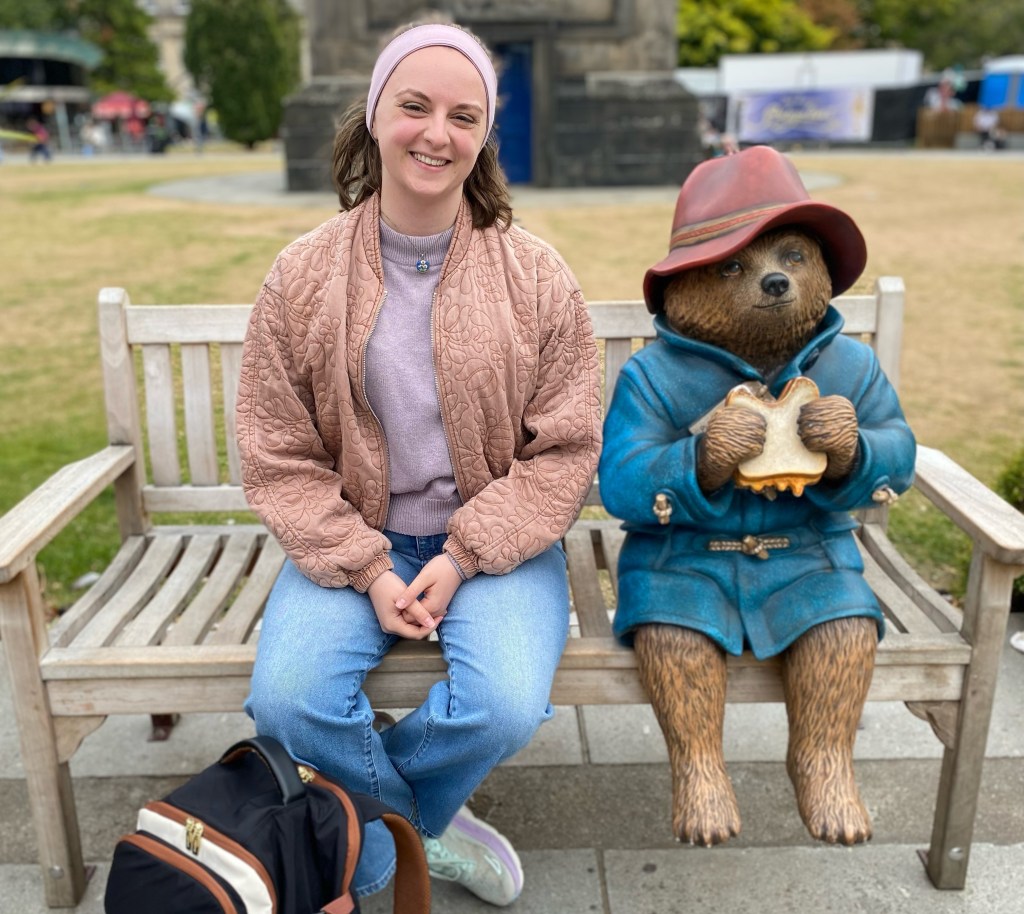
I was honored to receive an email recently telling me that my book would be featured in a display at The Caretaker’s Cottage curated by the West Lafayette Public Library. My wife and I went over to see it and she took this photo of me. You can see MAMLA on the top shelf of the display case farthest to the right.

It’s quite the incentive to put my nose to the grindstone and finish my sequel, The Most Amazing Museum of Chicago. I have 10,335 words written on my first draft, so that’s not nothing! 

The Caretaker’s Cottage was remodeled into a beautiful little museum that the public library set up and it sits on the edge of Grandview Cemetery, where my parents and grandmother are buried. The cottage was built around the turn of the twentieth century and housed the cemetery caretaker and his family.

The grand view, now hidden by majestic maples and towering oak trees, looked down the hillside and across the Wabash River, providing a spectacular vista of Lafayette.

I used to walk or ride my bike past that cemetery on my way to junior high school and always found it calming, not frightening like cemeteries in the movies.

The rotating displays of the museum honors West Lafayette residents from soldiers to sports figures to writers, telling the story of our city. There used to be a display of my mother’s campaign memorabilia and some highlights of her twenty-four years as mayor. That exhibit and more are now housed on the top floor of the public library.

A less comfortable story, but vital to tell, is that West Lafayette was once a sun-down town. That means that everyone who was not white had to leave the town by the time the sun went down. Non-whites were allowed to clean houses and do manual labor, but they could not live here. 

This practice ended before I was born, but it sends a cold spike into my guts when I think about it. The docent admitted that she benefitted from generational wealth, living in the house that her grandparents built about a century ago. She even showed us a copy of the deed they signed with large letters excluding non-whites. It was poignant. 

What is it they say in Alcoholics Anonymous? Before you can begin mending, you have to admit you have a problem? I’m glad to see the racial mix across the city and when I work part time at the Junior/Senior High School. I hope we, as a nation, can continue to mend and learn from our history how ever uncomfortable it may be. 

We are, after all, the human race. We are one people. 

TTFN

* * * * *

My middle grade novel, The Most Amazing Museum of Los Angeles is available through The BookBaby Bookshop at https://store.bookbaby.com/book/the-most-amazing-museum-of-los-angeles

Margerumalia – 20 Years Since Katrina

Newsletter – September 5, 2025

I was preparing to direct a stage version of Dead Man Walking in Wichita when Katrina hit the Gulf Coast.

The Death Penalty Discourse Center operated out of that area. Had they even received the check for the performance rights? I had no way of knowing, and they were unreachable. Louisiana was hit hard.

There was nowhere to go but forward. 

Sister Helen Prejean’s bestselling memoir had been adapted into an Academy Award winning movie and, as a theatre professor working in a university founded by nuns, I knew this would be a significant opportunity. The hurricane turned many lives upside down and this play did the same.

I gathered a cast of very talented and dedicated actors who understood the gravity of this story and the questions of life and death. Even my eight-year-old daughter played an important role as the surviving sister of the murder victim. She delivered a haunting performance as the forgotten child, emotionally abandoned by her parents who were drowning in their own grief.

A local sister who ministered to prisoners on death row came to speak to the cast about “her men.” She told us moving stories of the men who lived daily with the regret of their deeds and their desire to make things right with the survivors, their consciences, and God. Her words transformed them from monsters into flawed human beings. 

For the execution scene, the university choir recorded a moving rendition of “Amazing Grace” that played through the prisoner’s death and the removal of his body on the gurney. The audience didn’t know that the sweet tenor solo in the recording was sung by the actor playing the prisoner. 

I have personal notes from several actors thanking me for the opportunity to live and feel the reality of their characters. One even described how she and the actors playing the parents of the murdered girl broke down in a group hug backstage, holding one another and weeping. She was thanking me for that experience.

My wife and I watched TV for weeks during Katrina recovery efforts, saddened by the mounting death toll.

Eventually the check did clear. Sister Helen and the members of The Death Penalty Discourse Center were among the survivors. I’m sure they were changed by the experience. I know we were.

* * * * *

If you received this email because it was forwarded to you by a subscriber, welcome. You can subscribe as well by following the link on my website: ericmargerum.com. A free story awaits you there.

Margerumalia – Vaccination The Old Fashioned Way

Newsletter – August 20, 2025

My mom poured the medicine into the spoon and put it in my brother’s mouth, then she crossed the room, poured out another spoonful and put the same spoon in my mouth.

That’s how I got the mumps when I was four years old.

A few days ago my doctor was reviewing my vaccinations and I told her the story of how I got the mumps. Mom gave it to me. And it was intentional. 

It happened in Germany when my Dad had the opportunity to work with a world renowned chemist and scheduled his first sabbatical leave to take advantage of the offer. Mom loved to travel and fully embraced the experience. Bringing along two boys under six? No problem! 

When I say “world renowned chemist” I’m not kidding. Dr. Eigen would be awarded a Nobel Prize in Chemistry a couple of years after we came back to the States. 

The family spent a total of nine months living in Germany—I should say West Germany, before the reunification of the two Germanys.

My brother and I each had a birthday during that time, his sixth, my fourth. We celebrated Christmas in that little German house and Dad laid the track for an electric train to circle the tree. On Christmas morning a toy bunny peeked out of my stocking and I played with him all day.

In the spring it was time to get ready for the return trip and my Dad came down with the mumps. My only memory of that was the doctor coming to give Dad a shot in his bare behind. I felt sorry for him but better him than me! 

A couple weeks closer to our departure date and Dad was feeling better but my older brother came down with a case of the mumps.

The vaccine hadn’t been invented yet and we wouldn’t be welcome to travel while infectious. If it took that long to reach to my brother, would it take that long before I got it? Time to consult the doctor.

My mother had earned a degree with majors in Chemistry and Biology and she knew the doctor was right: she had to infect me sooner than later. Still, she felt guilty about putting that spoon in my mouth. It went against all of her motherly instincts.

It was a classic textbook example of vaccination by exposure. I came down with a very mild case of the mumps from which I recovered quickly and we were all cleared to travel home. 

Mom? Oh, she never got sick. Ever. I couldn’t tell you why, she just had a robust immune system. At her funeral I thanked her for passing that gift along to me and my brothers. 

And Bunny? Yeah, he came home with me, went to college with me, grad school, too. Everywhere, in fact. He sits on my bookshelf now, his pink ears smudged, his whiskers bent, and his red ribbon bow now faded, but seeing him still makes me smile. I’ll put a picture of him below.

TTFN

* * * * *

My middle grade novel, The Most Amazing Museum of Los Angeles is available through The BookBaby Bookshop at https://store.bookbaby.com/book/the-most-amazing-museum-of-los-angeles

Margerumalia – Elephant Jokes

Newsletter – August 22, 2025

“You don’t get down off an ostrich. You get down off a duck.”

My latest entry for the New Yorker’s weekly caption contest. 

I admit, I borrowed the punchline from one of the many elephant jokes that were popular when I was a kid. I’ll also admit that I didn’t know what duck down was when I was that age. I thought the entire joke was based on the size of an elephant compared to the size of a duck. Obviously it’d be far easier to dismount a duck because you could just stand up. LOL.

Years later, when I actually understood the joke, I got to laugh about it all over again.

I consider this caption my homage to the well-known elephant joke. That’s not stealing, it’s a salute to the original. It also makes the reader imagine what the guy on the ground asked to get that response.

In improv this type of laugh line—a reminder about something said previously—is known as a call-back. Audiences adore a good call-back. It’s equivalent to an elbow in the ribs, including them in the joke while saying “See what I did there?”

I performed with an improv group in Los Angeles that was called Synthaxis. (Shout out to Margo and Phil who recently reminded me of that name!) If improv wasn’t difficult enough, we had the added challenge of being a children’s improv group. That meant we were playing in a world without guns, drugs, bad words, or naughty bits. Go ahead! Feel free to make stuff up, just dance around those land mines! 

One of those land mines was getting a “grab,” a suggestion from the audience.

I’ll never forget one time when me and another guy were asking the audience to name an activity and the only response was a wise guy who said “making love.” There are often several suggestions to choose from but when everyone heard that, the suggestions dried up.

My scene partner and I looked at each other, didn’t say a word, and started to mime hauling large objects around like a couple of furniture movers. We stacked one large object on top of the other for a couple of minutes until we were satisfied and stepped back to look at what we had made. 

“L – O – V – E,” one of us said. 

“LOVE,” said the other. 

And then we shook hands and congratulated one another.

It brought the house down! Second only to a good call-back is taking an impossible grab and figuring out a way to play it anyway.

Those moments are the “war stories” that actors share for years, the way athletes relive an amazing play that wins the game.

I hope you have some amazing “war stories” to share with friends and family. It can make for delightful nostalgia. Most story telling does.

TTFN

* * * * *

By the way, do you know how to make an elephant float? 

Root beer, two scoops of ice cream, and some elephant!

* * * * *

If you received this email because it was forwarded to you by a subscriber, welcome. You can subscribe as well by following the link on my website: ericmargerum.com. A free story awaits you there.

Margerumalia – Pain Experts

Newsletter – August 15, 2025

I had something to say to the guy wearing this T-shirt. 

Trust me, I’m not stupid. I know better than to get all confrontational. Especially when the guy next to him looks like he eats three bowls of Steroidios for breakfast every day. Besides, I saw the pack of shirtless teens jogging past me in the park. They’ll be back soon.

I had just finished listening to the latest Serial podcast: “The Retrievals, Season 2.” It’s about women who have gone through Cesarean Sections with inadequate anesthesia. Remarkably, the message from these women is that if they say they can feel everything, that’s because THEY CAN FEEL EVERYTHING.

And you know what the problem has been? Communication. 

The good news is that nurses, doctors, surgeons, and anesthesiologists really don’t want their patients to suffer. The bad news is that they haven’t learned the language skills to understand the difference between discomfort and pain. Until now.

Through the harrowing stories of the patients and staff, we learn what they are thinking, what their expectations are, and what they’re assuming rather than understanding. With the right words, the right communication skills, the difference is revolutionary, giving everyone the basis for understanding and permission to change the process. 

My wife can tell you that I’m more than a bit squeamish about graphic imagery. And I admit to crossing my arms across my abdomen a few times while listening. But that’s empathy. That’s the experience of stories, truth or fiction.

So I had to say something to this marine. 

I approached the car and said that I saw the words on the back of his shirt and wanted to tell him that pain is an indicator. A message that something needs attention. So it’s important to listen to your body. 

I told him how my wife and I encourage one another to take our cues from pain to change what we’re doing or to take a break from what’s causing that pain. 

Both young men listened respectfully—as marines are taught to do—but I saw that quick glance they shared, so I tried to lighten the moment. 

“Age is probably a big factor when you’re 40 years older than those boys running through the park,” and we all smiled knowingly, “but there are times when you have to pay attention to that indicator and not do more damage.” They nodded and thanked me, calling me sir. “I just needed to say after reading your shirt,” I added.

Did I make any difference? I don’t know. Did the NFL listen to accounts of Traumatic Brain Injury? The jury may still be out on that question.

It’s so important to speak up. To communicate. To listen. 

Maybe you can make a difference. 

Serial episodes are available wherever podcasts are offered. Both seasons of “The Retrievals” are excellent. I recommend them. 

TTFN

* * * * *

My middle grade novel, The Most Amazing Museum of Los Angeles is available through The BookBaby Bookshop at https://store.bookbaby.com/book/the-most-amazing-museum-of-los-angeles

Margerumalia – Jawsiversary

Newsletter – August 8, 2025

PHOTO: Pinterest

Jaws. The beginning of the summer blockbuster, they say. 1975. Fifty years ago! 

Jaws. The most intense abs workout of my life. 

My stomach ached more after seeing that movie than it did after 100 sit-ups in junior high gym class for the Presidential Physical Fitness Awards.

I blame the shock value. Hundreds of teenagers screaming at full volume every time the shark showed up…or when, say, a severed human head floated into view. [Spoiler alert.] My stomach muscles clamped together like a rusty bear trap with every screech.

And then there was the shark story delivered at night in the bowels of the little boat headed out to defeat The Great White. Robert Shaw, delivered that monologue with a deft mix of Ahab, Odysseus, and Falstaff. You can find it easily online and it’s worth the watch. Spielberg is quoted as having said that speech was probably his favorite scene from all his movies.

About a decade after seeing Jaws I was talking to a WWII vet and suddenly recalled that another vet had told me about his Navy experience in the Pacific where his ship was torpedoed and hundreds of men floated in the middle of the night while sharks picked them off one at a time. He even remembered having grabbed another sailor who had fallen asleep only to discover that the lower half of the man was missing. 

I’d been so drawn into that story from the film that I actually recalled it as a personal conversation. Imagine my embarrassment on realizing I’d heard it along with several hundred other people in the movie theater.

Wow, what a story. Who knew words could be so haunting?

AND it actually happened. It was the story of the U.S.S. Indianapolis after they had delivered the first atom bomb that would be dropped on Hiroshima. 

That’s what makes a summer blockbuster. Real human emotions that you remember like it was your own experience.

To lighten things up, I’ll close with a meme I ran across that made me laugh:

PHOTO: Pinterest

TTFN

P.S. For those of you keeping track, I just made up another word to add to the English Language, a portmanteau: Jawsiversary.

You’re welcome.

* * * * *

If you received this email because it was forwarded to you by a subscriber, welcome. You can subscribe as well by following the link on my website: ericmargerum.com. A free story awaits you there.