Margerumalia – Writers on Display

Newsletter – September 12, 2025

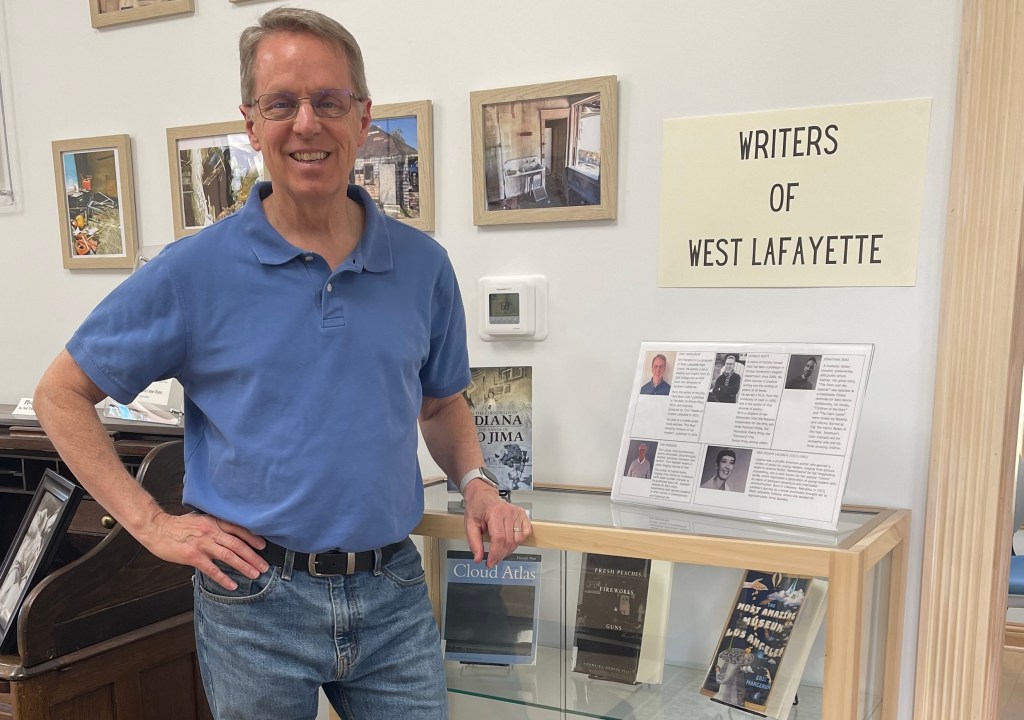
I was honored to receive an email recently telling me that my book would be featured in a display at The Caretaker’s Cottage curated by the West Lafayette Public Library. My wife and I went over to see it and she took this photo of me. You can see MAMLA on the top shelf of the display case farthest to the right.

It’s quite the incentive to put my nose to the grindstone and finish my sequel, The Most Amazing Museum of Chicago. I have 10,335 words written on my first draft, so that’s not nothing! 

The Caretaker’s Cottage was remodeled into a beautiful little museum that the public library set up and it sits on the edge of Grandview Cemetery, where my parents and grandmother are buried. The cottage was built around the turn of the twentieth century and housed the cemetery caretaker and his family.

The grand view, now hidden by majestic maples and towering oak trees, looked down the hillside and across the Wabash River, providing a spectacular vista of Lafayette.

I used to walk or ride my bike past that cemetery on my way to junior high school and always found it calming, not frightening like cemeteries in the movies.

The rotating displays of the museum honors West Lafayette residents from soldiers to sports figures to writers, telling the story of our city. There used to be a display of my mother’s campaign memorabilia and some highlights of her twenty-four years as mayor. That exhibit and more are now housed on the top floor of the public library.

A less comfortable story, but vital to tell, is that West Lafayette was once a sun-down town. That means that everyone who was not white had to leave the town by the time the sun went down. Non-whites were allowed to clean houses and do manual labor, but they could not live here. 

This practice ended before I was born, but it sends a cold spike into my guts when I think about it. The docent admitted that she benefitted from generational wealth, living in the house that her grandparents built about a century ago. She even showed us a copy of the deed they signed with large letters excluding non-whites. It was poignant. 

What is it they say in Alcoholics Anonymous? Before you can begin mending, you have to admit you have a problem? I’m glad to see the racial mix across the city and when I work part time at the Junior/Senior High School. I hope we, as a nation, can continue to mend and learn from our history how ever uncomfortable it may be. 

We are, after all, the human race. We are one people. 

TTFN

* * * * *

My middle grade novel, The Most Amazing Museum of Los Angeles is available through The BookBaby Bookshop at https://store.bookbaby.com/book/the-most-amazing-museum-of-los-angeles

Margerumalia – 20 Years Since Katrina

Newsletter – September 5, 2025

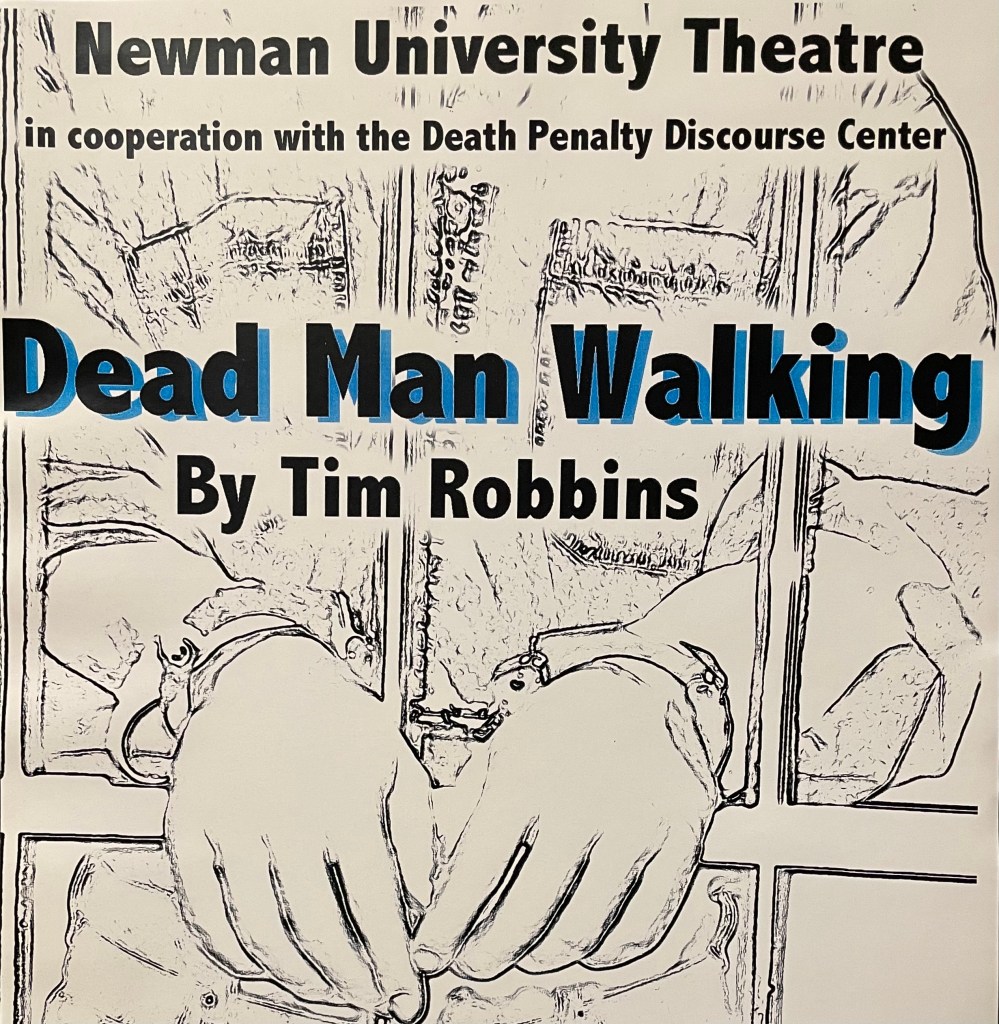
I was preparing to direct a stage version of Dead Man Walking in Wichita when Katrina hit the Gulf Coast.

The Death Penalty Discourse Center operated out of that area. Had they even received the check for the performance rights? I had no way of knowing, and they were unreachable. Louisiana was hit hard.

There was nowhere to go but forward. 

Sister Helen Prejean’s bestselling memoir had been adapted into an Academy Award winning movie and, as a theatre professor working in a university founded by nuns, I knew this would be a significant opportunity. The hurricane turned many lives upside down and this play did the same.

I gathered a cast of very talented and dedicated actors who understood the gravity of this story and the questions of life and death. Even my eight-year-old daughter played an important role as the surviving sister of the murder victim. She delivered a haunting performance as the forgotten child, emotionally abandoned by her parents who were drowning in their own grief.

A local sister who ministered to prisoners on death row came to speak to the cast about “her men.” She told us moving stories of the men who lived daily with the regret of their deeds and their desire to make things right with the survivors, their consciences, and God. Her words transformed them from monsters into flawed human beings. 

For the execution scene, the university choir recorded a moving rendition of “Amazing Grace” that played through the prisoner’s death and the removal of his body on the gurney. The audience didn’t know that the sweet tenor solo in the recording was sung by the actor playing the prisoner. 

I have personal notes from several actors thanking me for the opportunity to live and feel the reality of their characters. One even described how she and the actors playing the parents of the murdered girl broke down in a group hug backstage, holding one another and weeping. She was thanking me for that experience.

My wife and I watched TV for weeks during Katrina recovery efforts, saddened by the mounting death toll.

Eventually the check did clear. Sister Helen and the members of The Death Penalty Discourse Center were among the survivors. I’m sure they were changed by the experience. I know we were.

* * * * *

If you received this email because it was forwarded to you by a subscriber, welcome. You can subscribe as well by following the link on my website: ericmargerum.com. A free story awaits you there.

Margerumalia – Elephant Jokes

Newsletter – August 22, 2025

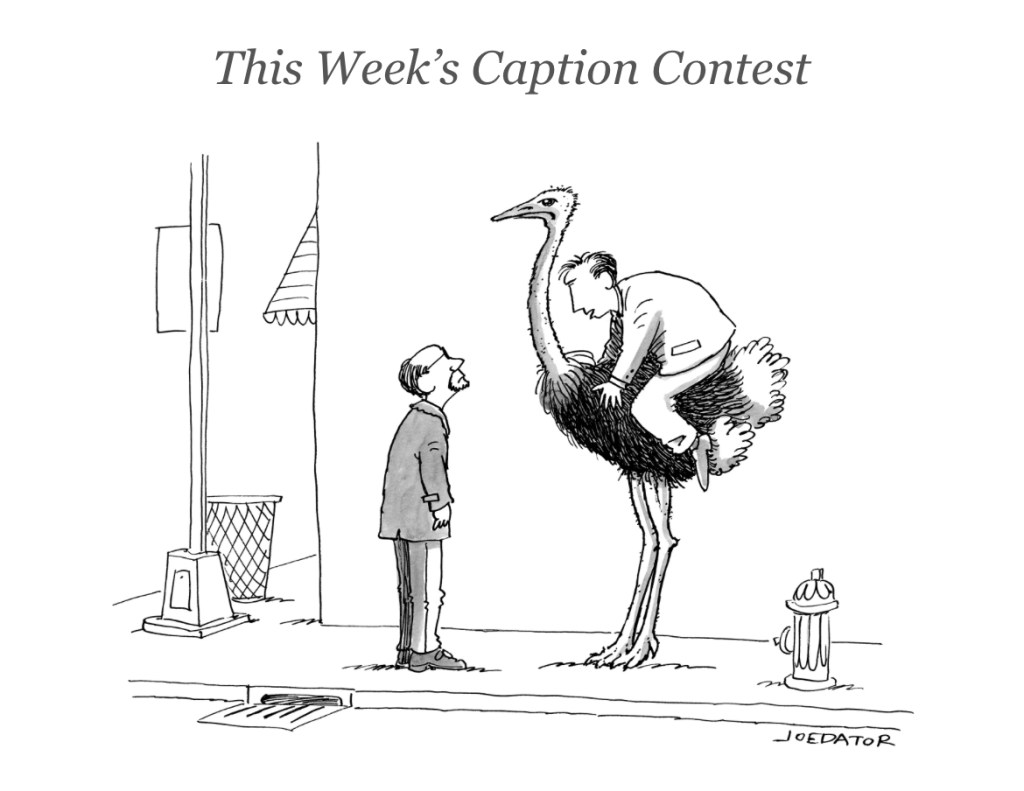
“You don’t get down off an ostrich. You get down off a duck.”

My latest entry for the New Yorker’s weekly caption contest. 

I admit, I borrowed the punchline from one of the many elephant jokes that were popular when I was a kid. I’ll also admit that I didn’t know what duck down was when I was that age. I thought the entire joke was based on the size of an elephant compared to the size of a duck. Obviously it’d be far easier to dismount a duck because you could just stand up. LOL.

Years later, when I actually understood the joke, I got to laugh about it all over again.

I consider this caption my homage to the well-known elephant joke. That’s not stealing, it’s a salute to the original. It also makes the reader imagine what the guy on the ground asked to get that response.

In improv this type of laugh line—a reminder about something said previously—is known as a call-back. Audiences adore a good call-back. It’s equivalent to an elbow in the ribs, including them in the joke while saying “See what I did there?”

I performed with an improv group in Los Angeles that was called Synthaxis. (Shout out to Margo and Phil who recently reminded me of that name!) If improv wasn’t difficult enough, we had the added challenge of being a children’s improv group. That meant we were playing in a world without guns, drugs, bad words, or naughty bits. Go ahead! Feel free to make stuff up, just dance around those land mines! 

One of those land mines was getting a “grab,” a suggestion from the audience.

I’ll never forget one time when me and another guy were asking the audience to name an activity and the only response was a wise guy who said “making love.” There are often several suggestions to choose from but when everyone heard that, the suggestions dried up.

My scene partner and I looked at each other, didn’t say a word, and started to mime hauling large objects around like a couple of furniture movers. We stacked one large object on top of the other for a couple of minutes until we were satisfied and stepped back to look at what we had made. 

“L – O – V – E,” one of us said. 

“LOVE,” said the other. 

And then we shook hands and congratulated one another.

It brought the house down! Second only to a good call-back is taking an impossible grab and figuring out a way to play it anyway.

Those moments are the “war stories” that actors share for years, the way athletes relive an amazing play that wins the game.

I hope you have some amazing “war stories” to share with friends and family. It can make for delightful nostalgia. Most story telling does.

TTFN

* * * * *

By the way, do you know how to make an elephant float? 

Root beer, two scoops of ice cream, and some elephant!

* * * * *

If you received this email because it was forwarded to you by a subscriber, welcome. You can subscribe as well by following the link on my website: ericmargerum.com. A free story awaits you there.

Margerumalia – Pain Experts

Newsletter – August 15, 2025

I had something to say to the guy wearing this T-shirt. 

Trust me, I’m not stupid. I know better than to get all confrontational. Especially when the guy next to him looks like he eats three bowls of Steroidios for breakfast every day. Besides, I saw the pack of shirtless teens jogging past me in the park. They’ll be back soon.

I had just finished listening to the latest Serial podcast: “The Retrievals, Season 2.” It’s about women who have gone through Cesarean Sections with inadequate anesthesia. Remarkably, the message from these women is that if they say they can feel everything, that’s because THEY CAN FEEL EVERYTHING.

And you know what the problem has been? Communication. 

The good news is that nurses, doctors, surgeons, and anesthesiologists really don’t want their patients to suffer. The bad news is that they haven’t learned the language skills to understand the difference between discomfort and pain. Until now.

Through the harrowing stories of the patients and staff, we learn what they are thinking, what their expectations are, and what they’re assuming rather than understanding. With the right words, the right communication skills, the difference is revolutionary, giving everyone the basis for understanding and permission to change the process. 

My wife can tell you that I’m more than a bit squeamish about graphic imagery. And I admit to crossing my arms across my abdomen a few times while listening. But that’s empathy. That’s the experience of stories, truth or fiction.

So I had to say something to this marine. 

I approached the car and said that I saw the words on the back of his shirt and wanted to tell him that pain is an indicator. A message that something needs attention. So it’s important to listen to your body. 

I told him how my wife and I encourage one another to take our cues from pain to change what we’re doing or to take a break from what’s causing that pain. 

Both young men listened respectfully—as marines are taught to do—but I saw that quick glance they shared, so I tried to lighten the moment. 

“Age is probably a big factor when you’re 40 years older than those boys running through the park,” and we all smiled knowingly, “but there are times when you have to pay attention to that indicator and not do more damage.” They nodded and thanked me, calling me sir. “I just needed to say after reading your shirt,” I added.

Did I make any difference? I don’t know. Did the NFL listen to accounts of Traumatic Brain Injury? The jury may still be out on that question.

It’s so important to speak up. To communicate. To listen. 

Maybe you can make a difference. 

Serial episodes are available wherever podcasts are offered. Both seasons of “The Retrievals” are excellent. I recommend them. 

TTFN

* * * * *

My middle grade novel, The Most Amazing Museum of Los Angeles is available through The BookBaby Bookshop at https://store.bookbaby.com/book/the-most-amazing-museum-of-los-angeles

Margerumalia – Thesaurus Anyone?

Newsletter – August 1, 2025

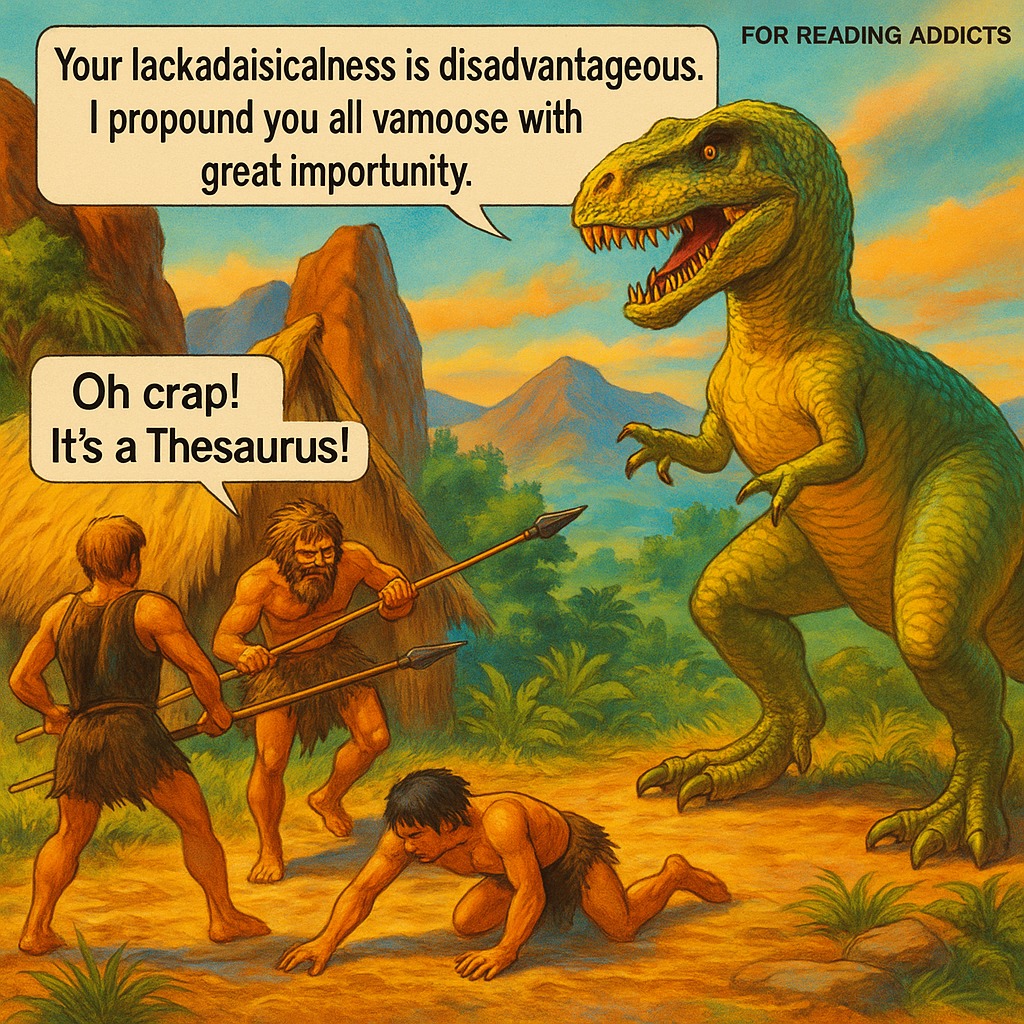
PHOTO: Facebook @ForReadingAddicts

Have you had it up to here with hearing the word “unprecedented”? I have. 

The other day a news anchor interrupted herself to apologize for using the word before she said it. Again. When “unprecedented” becomes attached to “sorry for using this word so much” it’s time to stop using it. Don’t ya think?

It’s like the commercials on TV that cause us to dive for the remote and desperately stab at the mute button so we don’t have to hear that annoying voice yet again. 

I don’t do that with Progressive commercials because they’re so creative and humorous, and they’re usually replaced before I can grow weary of them.

Using my Merriam-Webster Thesaurus app, I found several substitutes for unprecedented. Words like fresh, new, novel, original, pioneering, and trailblazing all have a degree of admiration that might be too much praise for a news program, but words like unconventional, unheard-of, and even unique would be welcome replacements.

Notice in the paragraph above I referred to synonyms by mentioning a thesaurus and then used the words “substitutes” and “replacements” rather than using “synonyms” several times over. 

This is the joy of the English Language! We have so many options with so many shades of meaning. 

The other day I started a short story completely unrelated to my drafting of The Most Amazing Museum of Chicago and I couldn’t quite find my way into writing it until I tried it in second person (using the pronoun “you”). Suddenly it landed just right, creating a mood I didn’t even know I wanted. But that word “you” tripped me up a bit. There’s no alternative word in second person, even first person has the variance of I/me. 

That’s my challenge as a writer. What are my options? How do I solve this puzzle so my reader doesn’t dive for the remote. I don’t know yet but I’ll be working on it.

It’s strange, it’s novel, it’s new. Just not unprecedented.

By the way, precedence just means it happened before. It’d be okay to say “nothing like this has ever happened before.”

We have a saying in theatre: less is more. 

Would less use of “unprecedented” be more than I could hope for?

TTFN

* * * * *

My middle grade novel, The Most Amazing Museum of Los Angeles is available through The BookBaby Bookshop at https://store.bookbaby.com/book/the-most-amazing-museum-of-los-angeles

Margerumalia – Viewers Like You

Newsletter – July 25, 2025

Leah, the youngest girl in The Most Amazing Museum of Los Angeles got her start thanks to PBS.

It began when Debbie was reading a book to our young daughter who started reading the words as well. Had she just memorized her favorite book? Kids are like that, they soak things up like sponges. Debbie pulled out a book that she knew our daughter had never seen and asked her to read it.

She did. Our little sponge had taught herself how to read.

How, you ask? We credit PBS.

All her favorite programs were on PBS, from “Sesame Street” to “Barney” to “Between The Lions” and more. All the groundwork was laid out to help her learn how to read and do basic math. 

When she got tested for Kindergarten, the teacher told us she was already reading at a fourth grade level. We started referring to her as “a smarticle.” 

The character of Leah is also a five year old—”almost six” she tells people—who taught herself how to read. Her adventure in Eveningwhere with teen step-sister, Vanessa, shows how very smart she is.

PBS helped educate our daughter those many years ago. Today, I listen to “The PBS News Hour” podcast every morning on my walks. I also listen to NPR’s “Fresh Air” and “The Treatment” to learn about movies, books, TV shows, and much more.

I’m so disappointed that the funding for these programs is being dropped by the government when they’re so valuable to the American public. 

I’m contributing money to PBS and NPR and I’ll offer you a free ebook copy of MAMLA if you show me your receipt that says you’ve also donated (send it to eric@ericmargerum.com). My ebook is in EPUB format and can be read on Kindle, Apple Books, Nook, and most ebook apps. 

Be sure to black out any credit card numbers, or other important information. I’ll also delete the receipt after I send you the ebook. 

Many PBS and NPR stations award thank-you gifts like tumblers, tote-bags, and hats. If you get one, please use it or wear it with pride and let people know that these programs are made possible by people like you.

TTFN

* * * * *

DONATION SITES: 

www.pbs.org and www.npr.org

Ken Burns, documentary director of “The Civil War,” “Baseball” and “The National Parks: America’s Best Idea” said on PBS: My biggest thing is, I travel around the system all the time. And I meet in big markets and small markets. And you begin to see the way in which, particularly in those small rural markets, the PBS station is really like the public library. It’s one of those important institutions. It may be the only place where people have access to local news, that the local station is going to the city council meeting.

* * * * *

If you received this email because it was forwarded to you by a subscriber, welcome. You can subscribe as well by following the link on my website: ericmargerum.com. A free story awaits you there.

Margerumalia – Anne of Green Gables

Newsletter – July 18, 2025

Hey, look at that! I designed a book cover. Pretty good, I think. (Okay maybe it’d be better without the manhole cover.) 

I thought I’d take time this week to recommend a classic book that I ran across when looking through free Apple Audiobook options. In fact, I was listening to it while walking on the path in the photo.

I worked in a bookstore for about three years in L.A. and became familiar with a lot of titles and authors. One we were constantly re-stocking was the Anne of Green Gables collection in the children’s section. My mom had read several of the Little House on the Prairie series to me and my brothers, and I tended to think of the Green Gables books as pretty much the same thing.

They’re not. 

First of all, Green Gables is in Canada. Second, Anne is one of the best characters ever written. She’s is witty, charming, optimistic, dramatic, and verbose! I mean, this gal can talk the ear off a pitcher! 

I was literally laughing out loud while listening to this audiobook. When a passer-by on the path was startled by my guffaw I felt the need to explain to her that I was laughing at an audiobook. I think her expression could be described as tolerant. And she probably labelled me as “odd but not dangerous.”

Kudos to the narrator, Kae Denino, for capturing the essence of Anne’s character and for spouting long paragraphs of Anne’s speeches almost without stopping for breath. 

I’m working on narrating my own book and, believe me, I know what Denino has accomplished here! 

The rest of what makes Anne’s incessant chatter hilarious is that she was “adopted” by two quiet elderly people—a brother and a sister—who are completely taken aback by the child they’ve brought into their home. They were expecting a boy! Anne wins them over, of course, but not without a lot of drama and many what-are-we-going-to-do-with-her moments.

At one point in the story I knew Anne’s words would get her into trouble once again and I kind of thought of skipping ahead. “We’ve already seen this episode,” I thought, but, to the author’s credit, Anne did learn from her mistakes and grew more mature with time. Don’t we all? 

Another compliment to the narrator is that Anne’s pitch and tone at the end of the book reflected a character who had grown up and taken on more adult attitudes. I really believed this was an older version of the same person. Subtle, but solid. 

There’s so much we can learn just by paying attention to someone else’s work, whether it’s a writer, a narrator, or a graphic artist. My design for this newsletter reflects what I learned from someone who designed many of my theatre posters at Carthage College. 

Everyone in your life is a teacher. If you pay attention, you may learn something.

TTFN

* * * * *

If you received this email because it was forwarded to you by a subscriber, welcome. You can subscribe as well by following the link on my website: ericmargerum.com. A free story awaits you there.

Margerumalia – A Spotlight on Betty White

Newsletter – July 11, 2025

I stood in line behind Betty White. I was nineteen and she was legendary.

I wanted to say something, but knew it had to be worth saying.

This moment happened in Akron, Ohio, where I was working as an apprentice for The Kenley Players. Kenley also had summer contracts with theatres in Dayton and Columbus. Most of the summer I worked in the box office but I also got to do an occasional load-in or a load-out because it was an eleven show season. One week performances with one day of travel between cities. John Kenley was great about making sure his apprentices were included in free dinner events put on by local restaurants. 

I did this for two summers while I was in college.

Betty White was there both times. 

The first season began with the musical Chicago featuring Alan Ludden, known mainly as the long-running host of “Password.” He played the flamboyant lawyer Billy Flynn, who gave them “the ol’ razzle dazzle” to secure a not-guilty verdict for Roxie Hart. He was good with the role, too, playing just the right balance of manipulation and charm. 

He was also married to Betty White. 

Here’s a charming clip of Betty White flirting with Allen Ludden the first time she appeared on “Password” as one of the celebrities. https://tvline.com/news/betty-white-allen-ludden-password-romance-974130

In many of my celebrity meet-ups I only thought of the right thing to say five minutes afterwards, but this time I think I nailed it. After complimenting her work on “The Mary Tyler Moore Show” I asked her whether she preferred performing on stage or for the camera. 

She told me that a sitcom like MTM was the best of both worlds. They got to perform in front of a live audience as well as playing for the camera. She proved that a few years later when she co-starred in seven seasons of “The Golden Girls.” Living her best life even after the death of her beloved husband. 

My second year with The Kenley Players I was stationed in Dayton where I spent a lot of time with the stagehands in addition to working in the box office. That was the year Betty White was the star in “Hello, Dolly!” and I played a big role in letting her shine. 

I was assigned to sit in the fly rails for that show, where a huge dimmer board controlled all the lights of the production. The union man, an Old Pro that I looked up to, operated most of the dimmers but in the days before computer-operated boards sometimes three or four hands were needed. I took great pride in pushing the sliders to just the right levels at the right time. 

When there were lighting problems in Akron and the Old Pro was needed there, he told me that I knew how to do it all and that another union guy would be brought in to be my assistant. I was in charge, he told me, mounting his Harley to zip out to Akron.

My new assignment included the moment in the title song when Betty White appeared at the top of the stairs to be serenaded by the waiters in the restaurant. The only part of that entire show that I remember was timing the Betty White Special to the music after the cue from the stage manager. (We could see the top of the stairs but the SM couldn’t.) I’m proud to say the Betty White Special was perfect every time. 

Next time you watch a movie, a TV show, or live theatre, take a moment to appreciate the many names of people behind the scenes who really, really care about getting it right every time. 

I’ve been a fan of Betty White to this day.

TTFN

* * * * *

If you received this email because it was forwarded to you by a subscriber, welcome. You can subscribe as well by following the link on my website: ericmargerum.com. A free story awaits you there.

Margerumalia – My Familect

Newsletter – June 20, 2025

PHOTO CREDIT: http://www.quickanddirtytips.com/grammar-girl

Grammar Girl has been in my podcast feed for about a dozen years and I always learn something new and interesting from her. She feels like a friend that lives in my pocket just to tell me stuff about the English Language.

Last week she interviewed an expert on gestures and how they play a role in communication, including differences among cultures. Italians, for example, tend to gesture from the shoulder all the way down the arm, using plenty of space in front of them and to the sides. Germans, on the other hand [no pun intended], use their arms from the elbows when they talk, and their gestures are just to the front.

As a result, we tend to think that Italians use more gestures while Germans use less. Turns out that their gesture count was the same, but the style of gesture gives the impression of more. 

Mignon Fogarty, the actual name of Grammar Girl, also has a unique segment she calls the “familect.” That’s a portmanteau—or mash-up—of “family” and “dialect” indicating a term that your family understands but others would not. 

My younger brother created such a familect when he was learning to talk, enthusiastically shouting “wrench ryes” when Mom pulled the french fries out of the oven. We fondly called them wrench ryes for years afterwards. 

My daughter was the source of what I’ll call a familect adjacent story. 

She was in the fourth grade and had joined the Spell Bowl team—different from a spelling bee because every member contributes to the success of the team. 

One day when I came home from work, she was sitting at the kitchen counter going over her list of words while Debbie prepared dinner. One word was really stumping her: bureaucracy.

I’d picked up many different techniques for memorization so I studied the letters and came up with this sentence: Big Ugly Red Elephants Are Under Cars, Reading And Cooking Yams. Our daughter was thrilled, Debbie told me to write it down before I forget, and I was the hero of the moment! 

Fast forward several months to an elementary school gym where about twenty Spell Bowl teams were competing for the regional championship. Each round, another set of students sat with their proctors at desks spread across the gym floor and when the speaker carefully announced each word, the students wrote it on a piece of paper in front of them. The proctors confirmed each correct word and points were added to the team’s score. Six one-point words, and one two-point bonus word.

When it was our daughter’s turn, the bonus word was—I kid you not—bureaucracy. 

She spun around in her chair and spied us in the bleachers on the other side of the gym. Her expression said “I GOT this!” Her proctor quickly instructed her to face front as my wife and I grinned and quietly recited my sentence: Big Ugly Red Elephants Are Under Cars, Reading And Cooking Yams.

The team didn’t win a trophy, but our daughter got a perfect score on all her words and practically knocked us down with hugs afterwards. 

We went out for ice cream to celebrate.

TTFN

* * * * *

My middle grade novel, The Most Amazing Museum of Los Angeles, is available through The BookBaby Bookshop at https://store.bookbaby.com/book/the-most-amazing-museum-of-los-angeles

Margerumalia – Stories From The Professor

Newsletter – June 13, 2025

It’s kind of incredible for me to imagine that this picture of my father was taken when he was younger than I am now. He was almost ninety when he died, so I still have a ways to go, but this picture of him is solidly placed in my memory as “Dad.” 

Dad, whose work as a Professor of Chemistry took the family on two sabbaticals in Europe. Dad, who planned camping trips and canoe trips, who played tennis and squash, who liked listening to jazz, who had season tickets to Big Ten football games. Dad, who was quick to pull out a pen and write on a napkin when we had math or science questions at the dinner table. 

Dad, the teller of stories!

Mom read us books as we travelled cross country and she was very much a part of the hiking, tennis, music, sports, and wanderlust, but when we found our campsite and built the campfire, Dad had a story to tell. 

Dad and his brothers grew up in a small town outside of St. Louis, now part of the greater metropolis, and when he was a teenager he got a summer job with the Parks & Recreation Department that included, among other things, telling stories to the younger kids. I imagine them gathered beneath a shady elm tree to stay out of the sun in the hot, humid Missouri afternoons.

He couldn’t remember the content of those stories. Like improvisation, you’re only in the moment, following your imagination, following your impulses.

I later learned that this was my preferred approach to writing stories, the “pantser” approach (from “flying by the seat of my pants”). I think my improv training played into this approach, but with Dad it was instinctual. 

He got ideas from people around him or the landscape or the animals. When my younger brother was avid about collecting rocks and we were traveling west, Dad invented a character who was nicknamed Rock Hound because he, too, had a huge interest in rocks, and his tracking skills were developed from that fascination.

Fast forward about twenty-five years to when I was teaching Theatre at Carthage College.

My wife and I still talk about the lecture Dad gave when he offered to tell the chemistry students about his latest research. There were about a dozen students and a couple faculty, so we sat in on the lecture, too. 

Neither of us can remember the content of his talk, most of the science was over our heads, but we still recall that he was telling a story. He presented the question that the research team wanted to solve, told about the experiments they created to find the answers, described the hurdles they encountered along the way, and wrapped it all up with what they discovered. 

Classic story structure! Short of ending it with “…and they all lived happily ever after.” 

Thanks, Dad, for raising me with stories to show how it’s done. 

Fast forward another twenty years.

Dad was in Memory Care when I was writing MAMLA and I would spend three days a week with him while Mom was getting dialysis all afternoon. He’d read the newspaper while I wrote the latest adventure of the Shafer Family. One time he asked me what I was writing so I read him the passage where Ryan and Maria were escaping the dire wolves and he said he it was very exciting. 

That memory makes me smile. Approval from the teller of tales.

TTFN

* * * * *

If you received this email because it was forwarded to you by a subscriber, welcome. You can subscribe as well by following the link on my website: ericmargerum.com. A free story awaits you there.