Newsletter – July 11, 2025
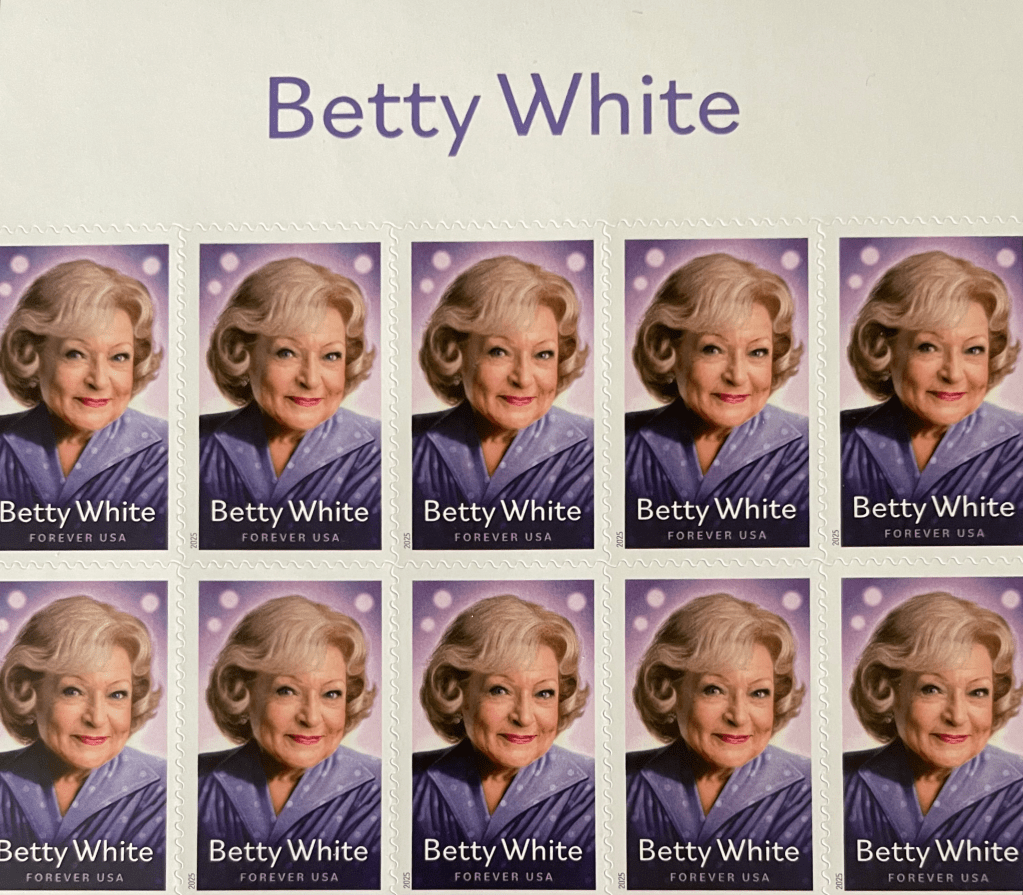
I stood in line behind Betty White. I was nineteen and she was legendary.
I wanted to say something, but knew it had to be worth saying.
This moment happened in Akron, Ohio, where I was working as an apprentice for The Kenley Players. Kenley also had summer contracts with theatres in Dayton and Columbus. Most of the summer I worked in the box office but I also got to do an occasional load-in or a load-out because it was an eleven show season. One week performances with one day of travel between cities. John Kenley was great about making sure his apprentices were included in free dinner events put on by local restaurants.
I did this for two summers while I was in college.
Betty White was there both times.
The first season began with the musical Chicago featuring Alan Ludden, known mainly as the long-running host of “Password.” He played the flamboyant lawyer Billy Flynn, who gave them “the ol’ razzle dazzle” to secure a not-guilty verdict for Roxie Hart. He was good with the role, too, playing just the right balance of manipulation and charm.
He was also married to Betty White.
Here’s a charming clip of Betty White flirting with Allen Ludden the first time she appeared on “Password” as one of the celebrities. https://tvline.com/news/betty-white-allen-ludden-password-romance-974130
In many of my celebrity meet-ups I only thought of the right thing to say five minutes afterwards, but this time I think I nailed it. After complimenting her work on “The Mary Tyler Moore Show” I asked her whether she preferred performing on stage or for the camera.
She told me that a sitcom like MTM was the best of both worlds. They got to perform in front of a live audience as well as playing for the camera. She proved that a few years later when she co-starred in seven seasons of “The Golden Girls.” Living her best life even after the death of her beloved husband.
My second year with The Kenley Players I was stationed in Dayton where I spent a lot of time with the stagehands in addition to working in the box office. That was the year Betty White was the star in “Hello, Dolly!” and I played a big role in letting her shine.
I was assigned to sit in the fly rails for that show, where a huge dimmer board controlled all the lights of the production. The union man, an Old Pro that I looked up to, operated most of the dimmers but in the days before computer-operated boards sometimes three or four hands were needed. I took great pride in pushing the sliders to just the right levels at the right time.
When there were lighting problems in Akron and the Old Pro was needed there, he told me that I knew how to do it all and that another union guy would be brought in to be my assistant. I was in charge, he told me, mounting his Harley to zip out to Akron.
My new assignment included the moment in the title song when Betty White appeared at the top of the stairs to be serenaded by the waiters in the restaurant. The only part of that entire show that I remember was timing the Betty White Special to the music after the cue from the stage manager. (We could see the top of the stairs but the SM couldn’t.) I’m proud to say the Betty White Special was perfect every time.
Next time you watch a movie, a TV show, or live theatre, take a moment to appreciate the many names of people behind the scenes who really, really care about getting it right every time.
I’ve been a fan of Betty White to this day.
TTFN
* * * * *
If you received this email because it was forwarded to you by a subscriber, welcome. You can subscribe as well by following the link on my website: ericmargerum.com. A free story awaits you there.
 Eric Margerum